Solutions/AI Governance
Let customers bank through their own AI agent. Stay in control.
Customers want to use their own AI agent with their bank accounts. Raidiam Connect lets you check exactly which software is asking, decide what it may do for each customer, and switch it off when you need to. Build on the APIs you already offer and the ecosystem you're already connected to.
- What it is
- Trust infrastructure that lets you identify, verify and control each copy of the software acting for a customer.
- Who decides
- You do. Your authorisation server checks Raidiam's signed statements and issues the token.
- Built on
- OpenID Federation 1.0, OAuth 2.0, X.509 and mTLS. No proprietary protocol.
- Proven in
- National trust frameworks in Brazil, Australia, the UAE, New Zealand and the UK.
Your customers want to use AI agents. But how do you let them?
Customers already use AI agents for everyday tasks, and so do your staff. Now customers want to use them with their bank. That's a new channel and a new kind of digital experience, if you can say yes without putting customer information at risk. Today you have three options, and none of them work.
A customer asks their AI agent to look over last month's spending. The request reaches your bank through a connector running on the customer's computer.
And it's never just one. Every customer who connects runs their own copy, on their own device, and each needs different access.
- It has the customer's permission
- It has no client record at your bank
- It has no identity you can check
Before going live, your risk and compliance teams need confidence that you have the right controls and governance to manage AI agents securely. Without it, the programme stalls between pilot and production.
Here is how you give them that confidenceSay yes to the channel, on your conditions.
Raidiam Connect lets you trust software you have never met, and decide for yourself what that software may do.
You already have the building blocks.
Every bank wants to avoid major changes to its existing architecture. With Raidiam Connect, you add one component alongside what you already run and the ecosystem you're already connected to.
If you already connect to an open banking or open finance ecosystem built on Raidiam's stack, in the UK or Australia for example, you already run most of what this needs: the APIs, the security profile and the certificate-based trust. Your architecture stays as it is. This builds on the standards you already run, in a way your teams already know.
What you add is short: your authorisation server resolves OpenID Federation statements, accepts the connector's attestation and issues DPoP-bound tokens. If it can't yet, Raidiam Auth does it for you.
Not on one of these ecosystems? The same open standards apply, and we help you put the pieces in place.
Run your own Raidiam Connect instance, and let customers' AI agents reach the APIs you already offer.
Works with your estate
- 1
Your identity platform
Raidiam integrates with Ping, ForgeRock, Keycloak and more.
- 2
Your API gateway
Raidiam integrates with Kong, Apigee, AWS API Gateway and MuleSoft.
- 3
Your MCP servers
An MCP connector brings AI agents into Connect's trusted network, so the MCP services you expose can check them the same way.
- 4
No authorisation server to spare?
Raidiam Auth can issue the token, alongside your existing Ping, Okta or Azure AD.
We've been doing this for a decade.
Raidiam has run trust frameworks in production since 2016.
How does a bank trust a customer's AI agent? One request, four answers.
Before you let a customer's agent in, you need four answers. Here is how you get each one.
- 01Identify
Which copy of this software is asking?
You need
The exact copy on this customer's computer, not the app in general.
Every customer's copy of the connector has its own key, on their own device. You let in that one copy, for that one customer.
Software identity in Raidiam Connect - 02Verify
Who stands behind it?
You need
Proof that an organisation you trust vouches for that software.
Knowing which copy is asking isn't enough. The first time the connector calls, your server checks, automatically, that an organisation it trusts vouches for that software. No forms and no onboarding by hand. Resolved, not registered.
Signed statements from Raidiam Connect - 03Control
What may this copy do, for this customer?
You need
Only what the customer approved, inside your policy.
The customer approves on their own phone with Face ID and picks which accounts to share. You issue a read only token that only that copy can use.
Your authorisation server, or Raidiam Auth - 04Revoke
How do we change our mind later?
You need
To stop one copy, or all of them, and leave everything else running.
Lost laptop? Stop that one copy and everyone else carries on. Each of your systems picks up the change inside a window it states in advance: 300 seconds on Raidiam's public showcase, for example.
Raidiam Connect, read by each of your systems
One platform underneath.
Here is where each of the four answers comes from in Raidiam Connect, and how it reaches what you already run.
Software identity
Answers Identify. Each copy's own key, and what vouches for it.
Signed statements
Answers Verify and Revoke. The governed record, published on OpenID Federation for your systems to read.
Raidiam Auth, optional
Answers Control if your authorisation server can't yet. It issues the token alongside it, under your policy. FAPI 2.0 certified.
MCP connector
Brings agents into Connect's trusted network, so the MCP services you expose check them the same way.
Wherever it runs, the same answers.
- A customer's computer
- Your staff's agents
- AWS
- Azure
- Google Cloud
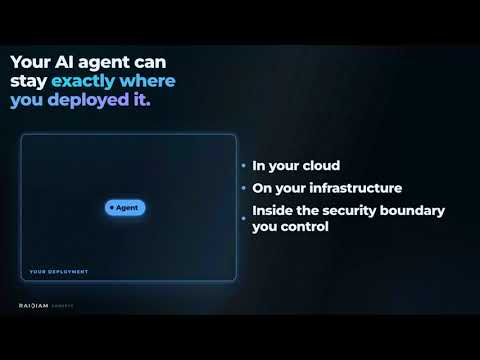
Each resolves through the same signed chain, and your platforms apply the same policy. What changes is the evidence each runtime can show, and you see how strong it is. The trust anchor your server pins sits in your own configuration, and it stays yours.
The answers your board will ask for.
Before a new channel goes live, risk and compliance need to know who decides, what happens when something fails, and where the evidence is.
- Uptime SLA
- 99.99%
- Recovery point
- <1 min
- Across regions, automatic failover
- Active-active
Control stays with you
You do. Connect publishes signed statements; your authorisation server applies your policy and issues the token.
Account data never passes through Raidiam. Connect is not in the request path.
If something changes
Your server decides on the answers it already holds, until its window ends. New software waits.
The exit is the entry in reverse. Your pins, keys and configurations stay with you.
Hosting and evidence
Raidiam operates your Connect tenant, on a dedicated tenant if you want one, in the region you choose. Anchor and authority signing keys sit in a key management service; a key boundary you operate is a deployment choice.
Policies, certifications and audit reports are in Raidiam's Trust Centre.
What banks ask before they say yes
Control and risk
Architecture
Getting started
What a first project looks like.
Are customers already asking to use their AI agent with their accounts? Tell us which agents, and what your authorisation server runs today.
One connector, one authorisation server, one set of accounts.
Start with the scope you can prove to your risk committee.
Your estate stays as it is.
Your authorisation server, gateway, APIs and app stay. Nothing is replaced.
Timeline and commercials, scoped with you.
We work them out together on the discovery call.
Where will your ecosystem take you?
Whether you're a regulator building a national digital economy, an enterprise platformising across brands and clouds, or a bank that wants to stop rebuilding trust for every new use case, there's a next step.
See It in Action
See how one investment in Raidiam Connect covers your first use case, and the next hundred.
See the Proof
Explore how governments, regulators and enterprises are using Raidiam to deliver trusted digital ecosystems.
Have questions first?
Tell us about your ecosystem and we'll show you where Raidiam fits.